

Model, Market and Version Note
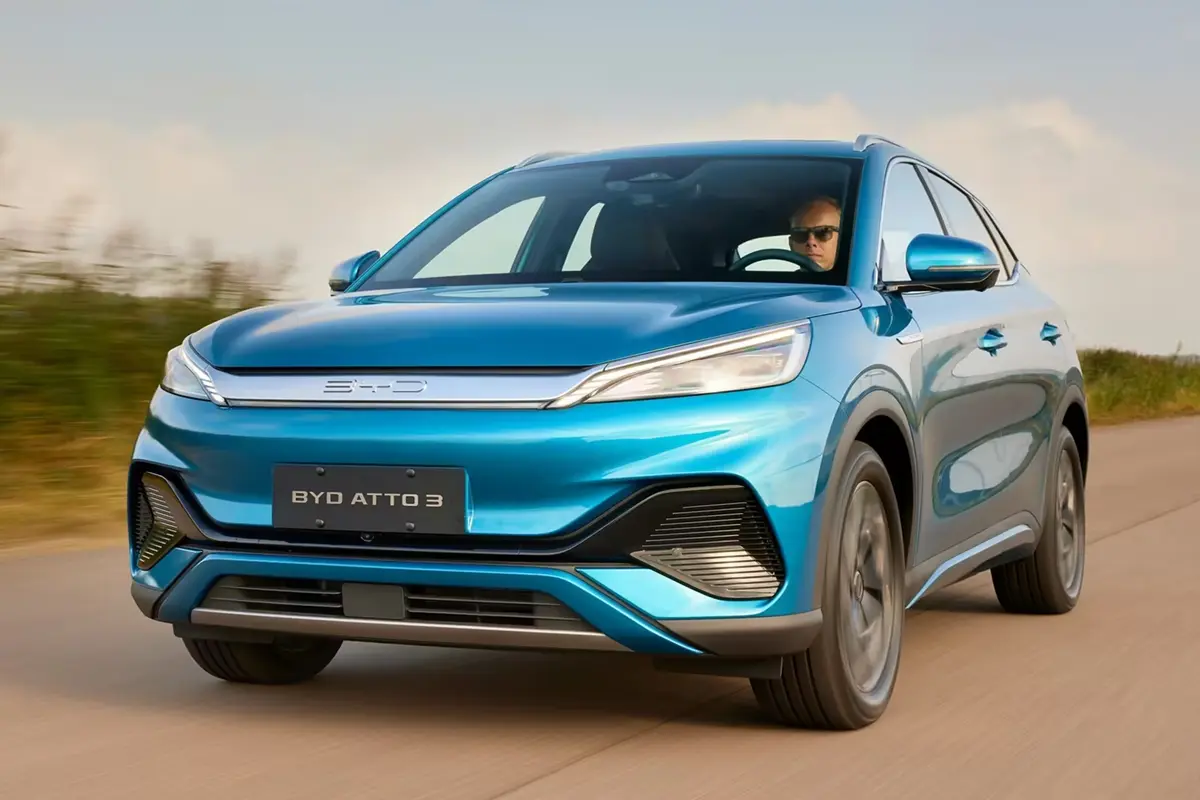
This guide refers to the 2026 BYD Atto 3 sold by Sime Darby Motors in Peninsular Malaysia, priced on-the-road (without insurance) at RM125,800 for the Ultra and RM138,800 for the Premium. It is the facelifted model — externally restyled, with a new 15.6-inch rotating display and, on the Premium, the rear-drive architecture previously seen on the Atto 3 Evo. A Performance variant using the 74.8 kWh battery was added in September 2026; prices and full specifications for that version should be confirmed with the dealer at point of purchase.
These are Malaysian-market specifications. Do not compare them directly with the Singapore Atto 3, which uses a smaller 100 kW powertrain, or with the Chinese-market Yuan Plus.
Cabin Space and Passenger Comfort
Both variants share the same footprint: 4,455 mm long, 1,875 mm wide, 1,615 mm high, with a 2,720 mm wheelbase and 175 mm ground clearance. That is a compact SUV sized for Malaysian car parks — not too bulky for a Bungalow driveway or a Mid Valley parking bay, but long enough to give rear passengers genuine knee room.
The cabin seats five. Two rear ISOFIX points are standard, and the brochure lists rear seatbelt reminders for all positions — important if you regularly carry grandparents, a maid or schoolmates. The 15.6-inch rotating screen is the cabin’s centrepiece; ventilated front seats, a panoramic sunroof and powered tailgear are trim-dependent, so check the equipment list on the exact car you are quoted.
Two family-specific caveats. First, rear headroom is acceptable for average-sized adults but tight for anyone over 180 cm, particularly with the panoramic roof. Second, three adults across the rear bench will be cosy; two child seats plus one adult is the realistic configuration. As always, install your own child seats at the showroom before committing.
Practicality, Storage and the Frunk
The Ultra has a 440-litre boot with the rear seats up and 1,340 litres with them folded, with no front boot. The Premium carries 1,360 litres maximum and adds a 101-litre front boot — enough for the charging cables, a soft cooler bag or a child’s school backpack.
How should a Malaysian family read 440 litres? It is sufficient for a compact stroller, a weekly grocery run and two school bags, but it is not a large boot by C-segment SUV standards. A full-size pram, a stairgate and two suitcases for a Kota Kinabalu or Desaru trip may require folding one rear seat. We have not measured these combinations independently — bring your pram and your family’s actual luggage to the test drive.
A feature that genuinely suits Malaysian family life is Vehicle-to-Load (V2L), fitted as standard on both variants and bundled with the V2L adapter. At a campsite, a beach trip or a kids’ sports tournament, you can power a kettle, a fan or a portable fridge from the car battery — something that petrol SUVs cannot do without additional kit.
Battery, Range and Real-World Expectations
BYD quotes two different range figures, and mixing them is the most common mistake in Atto 3 articles:
| Variant | Battery | NEDC range | WLTP combined (Ultra) |
| Ultra | 60.48 kWh Blade LFP | 480 km | 420 km |
| Premium | 74.8 kWh Blade LFP | up to 600 km | not officially quoted |
NEDC is optimistic — especially in Malaysia, where air-con runs most of the year and a loaded car with three passengers is common. A realistic planning figure for the Ultra is roughly 300–350 km of real-world mixed driving, and for the Premium, around 380–450 km, depending on speed and air-con use. These are editorial estimates, not independent tests.
For context: KL to Penang is about 350 km. The Ultra can do it on a charge in calm conditions, but you will want a top-up stop; the Premium can do it with margin, which is the single biggest reason to step up.
Charging and Intercity Reality
The Ultra charges at up to 88 kW on a CCS2 DC connection, while the Premium supports up to 220 kW DC. On AC, both use the Type 2 connector; a portable Mode 2 home cable is included.
Malaysia’s public charging network is growing fast but remains uneven. Gentari (Petronas-backed) operates 600+ licensed chargers and is targeting thousands more by end-2026; Shell Recharge, Setel, ChargEV and JomCharge fill the gaps. The Atto 3 is already verified on Gentari’s AutoCharge system, and BYD Malaysia signed an MoU with Gentari in October 2026 to explore flash charging at Petronas stations on intercity routes. Off-peak home/overnight rates (for example Setel/Gentari’s trial ~RM1.36/kWh between midnight and 7 am) make home charging dramatically cheaper than running a petrol SUV.
The honest caveat: on the North-South Expressway, charger availability at popular R&R stops can be patchy on holidays, and not every DC charger will deliver the Premium’s full 220 kW. Home charging at a landed property or a reliable condominium wallbox is what makes the Atto 3 frictionless. If you cannot charge at home or work, factor public-charger queuing into your decision.
Safety and Driver Assistance
The Atto 3 carries a five-star 2022 Euro NCAP rating (91% adult occupant, 89% child occupant, 69% vulnerable road users, 74% safety assist). Malaysia does not publish a separate ASEAN NCAP result for this model, so treat the Euro NCAP score as the independent safety evidence.
The Ultra has six airbags (front, side, curtain). The Premium adds a front far-side (centre) airbag, bringing the total to seven. Both variants come with autonomous emergency braking, adaptive cruise control with stop-and-go, blind-spot monitoring, a 360-degree camera, tyre-pressure monitoring and front/rear parking sensors. For Malaysian families, the 360 camera is genuinely useful in tight condominium ramps and mamak-stall parking.
Driving Experience
We have not conducted an independent road test of the Malaysian 2026 Atto 3, so we will not describe steering feel or ride quality from the driver’s seat. What the specifications tell us: the Ultra is a 150 kW/310 Nm front-drive car reaching 100 km/h in 7.3 seconds — brisk, not sporting. The Premium is a rear-driven car reaching 100 km/h in 5.5 seconds, with a dual-ball-joint front suspension and a five-link rear. Both ride on 235/50 R18 tyres, which suggests a firm-but-controlled setup. Confirm ride quality over Malaysian speed bumps and damaged federal roads on your own test drive.
Price, Warranty, Road Tax and Insurance
Price (OTR Peninsular Malaysia, without insurance):
- Atto 3 Ultra: RM125,800
- Atto 3 Premium: RM138,800
Warranty (Sime Motors):
- 6 years / 150,000 km vehicle warranty
- 8 years / 160,000 km high-voltage Blade Battery warranty
- 8 years / 160,000 km drive-unit warranty
- V2L adapter and portable charging cable included.
Note that, unlike some neighbouring markets, free scheduled servicing is not bundled — BYD’s Service Standard and Service Plus packages are purchased separately. This is a real ownership-cost difference to budget for.
Road tax: The full EV road-tax exemption ended on 31 December 2025. From 1 January 2026, Malaysia uses a kW-based structure roughly 85% lower than equivalent petrol cars. Third-party calculators place the 150 kW Ultra at around RM160 per year in Peninsular Malaysia, but rates vary by exact motor-power band, so confirm the figure with your dealer or JPJ.
Insurance: Comprehensive cover is estimated at roughly RM1,900–RM2,400 per year for a private, Peninsular registration, depending on insurer, NCD and selected sum insured.
Main Advantages
- Two genuinely distinct variants: value-focused Ultra and long-distance Premium.
- Premium’s 74.8 kWh battery, 220 kW DC charging and 101 L frunk are well suited to Malaysian intercity family trips.
- Five-star Euro NCAP result with a strong 89% child-occupant score; seven airbags on Premium.
- V2L as standard — practical for Malaysian camping, beach and sports-tournament life.
- Blade LFP chemistry, robust for daily home charging.
- Established after-sales via Sime Darby Motors; best-selling EV in Malaysia for two consecutive years.
- Low running costs: cheap home electricity, cheap (and now modest) road tax.
Main Disadvantages and Unknowns
- 440 L boot is mid-pack; large pram + luggage combinations may need a folded seat.
- Ultra’s 88 kW DC charging is unremarkable for highway road trips.
- Malaysian warranty (8 yr/160,000 km battery) is shorter than some markets; no free servicing bundle.
- Native Apple CarPlay/Android Auto must be confirmed on the 2026 head unit — historically absent on BYD’s DiLink.
- Public DC charging on intercity routes is improving but not yet holiday-proof.
- NEDC range figures are optimistic; real-world tropical range is an editorial estimate.
- Rear headroom is tight for very tall adults.
Relevant Alternatives
- BYD Atto 2 / Dolphin: smaller, cheaper, if boot space and intercity range are lower priorities.
- Smart #1 / Smart #3: similar price bracket, more premium interior, smaller rear seats.
- Proton e.MAS 7 / Chery eQ7: local/Chinese EV alternatives worth cross-shopping on warranty and after-sales.
- Volvo EX30: more expensive but stronger on native CarPlay/Android Auto and brand perception.
- Hyundai Kona Electric: worth comparing if native smartphone projection is a deal-breaker.
Who Should Consider It — and Who May Prefer Another
Choose the Ultra if most of your driving is around the Klang Valley, you can charge at home, and you want the most affordable entry into a five-star family EV. Choose the Premium if you regularly drive intercity, want the frunk, the seventh airbag and 220 kW charging, or simply prefer rear-drive dynamics.
Look elsewhere if you cannot charge at home, rely on native CarPlay for navigation, or need a genuinely large boot — in those cases, test the alternatives before you sign.
Final Verdict
The BYD Atto 3 is a good family EV for Malaysia in 2026 — but the facelift has turned it into two cars. The Ultra is a sensible, value-packed urban family EV; the Premium is the one that truly fits Malaysian intercity family life. Pick by how often you leave the Klang Valley, not by the showroom’s base price.
