

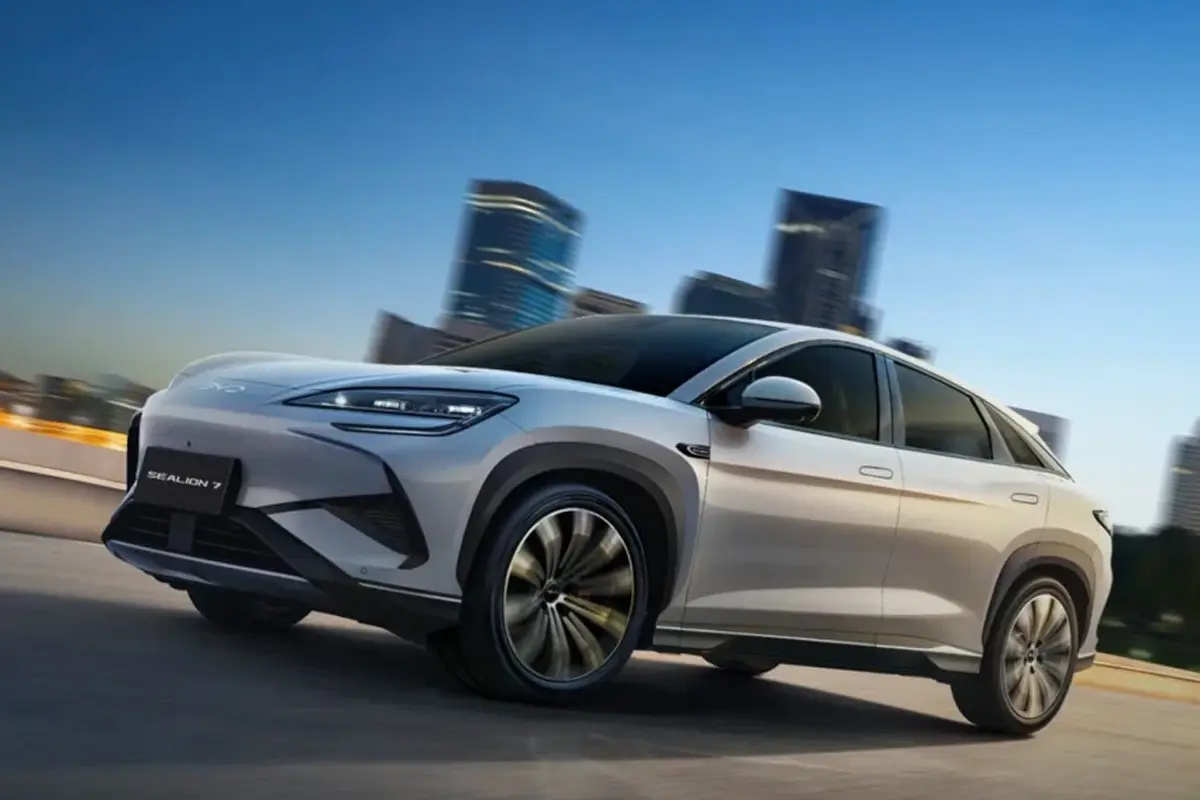
The Headline Numbers
According to the IEA’s Global EV Outlook 2026, around 20–21.6 million electric cars were sold globally in 2025 — roughly one in four new cars. The agency expects 23 million sales in 2026, about 28% of the new-car market. BloombergNEF’s outlook is similar: more than 23 million passenger EVs this year, up about 11% on 2025.
The growth is real, but it is uneven. In the first ten months of 2026, global EV sales reached about 17.5 million units, up a modest 5% year-on-year — a slower pace than 2024–2025, driven by softness in the US and a cooling Chinese domestic market.
China: Still the Engine, Now Exporting
China accounted for 63% of global electric car sales in 2025, and is expected to remain above 50% through 2030. BYD alone sold more than 4.6 million new-energy vehicles in 2025, extending its run as the world’s largest NEV maker for a fourth consecutive year.
Two shifts matter for the rest of the world:
- Domestic saturation and price competition. In October 2026, NEVs made up about 67.5% of China’s passenger-car sales, with pure battery-electric cars around 45% of the total. The home market is becoming saturated, and a brutal price war has compressed margins.
- Exports are the new growth story. BYD’s overseas sales rose to roughly 38.7% of revenue in the first half of 2026, with exports up nearly 68% year-on-year. Chinese brands are now the fastest-growing source of EVs in Europe, Southeast Asia and Latin America — even where tariffs have been imposed.
Europe: Accelerating Under Regulation
Europe is the bright spot among mature Western markets. In 2025, EU battery-electric registrations reached 1.88 million, up 29.9%, and in December 2025, BEVs outsold petrol cars in the EU for the first time on record. Germany’s BEV share reached 29.3% in July 2026. The IEA expects Europe to grow around 20% in 2026, with roughly one in three new cars electric by year-end.
The wildcard is Chinese competition. Despite EU countervailing duties of 7.8–35.3% on top of the standard 10% import tariff (BYD faces roughly 17% additional; SAIC/MG around 35.3%), Chinese brands reached a record 14.2% of Western Europe’s BEV market in the first five months of 2026, up from 9.4% a year earlier. Tariffs have not stopped the inflow — they have pushed Chinese brands toward local assembly, plug-in hybrids and higher-margin models.
United States: The Policy Cliff
The US is the major-market outlier. After years of growth, US plug-in EV sales fell about 4% in 2025 to just over 1.5 million units — the first annual decline in a decade. The trigger was the expiry of the $7,500 federal clean-vehicle tax credit on 30 September 2025: buyers pulled purchases into Q3 2025, then sales fell sharply, with March 2026 down roughly 34% year-on-year.
On top of the subsidy cliff, the US imposed 100% tariffs on Chinese EV imports, and several legacy automakers have scaled back or cancelled EV programmes in response. The result is a market where consumer interest exists but affordable product and charging infrastructure do not — a self-inflicted slowdown rather than a rejection of electrification.
Southeast Asia: From Adoption to Production
Southeast Asia is the region where the next decade of growth is being built. After more than doubling in 2025 to over 500,000 EV sales, the ASEAN EV market is projected to grow from about US$8.5 billion in 2025 to US$30.8 billion by 2030 (a near-30% CAGR).
Country-by-country:
- Thailand leads on policy and manufacturing (EV3.5 incentives, local-content rules), with EV sales up about 40% in 2025 and the region’s largest public charging network.
- Indonesia has the steepest growth curve, leveraging its nickel reserves, a BYD plant coming online, and tax relief (0% luxury tax, 1% VAT).
- Malaysia and Vietnam are growing from a smaller base, with Chinese brands (BYD, and others) leading sales.
The strategic shift is from selling imported cars to building them locally — the same playbook that built the Thai and Indonesian auto industries decades ago, now for EVs.
The Underlying Trends Shaping 2026
1. LFP is now the mainstream battery chemistry. Lithium iron phosphate, popularised by BYD’s Blade Battery and adopted by Tesla’s entry models, is estimated to power more than 40% of new BEV shipments in 2026 and an even larger share of cell production. Lower pack prices — now around US$80–100/kWh — are what make affordable EVs possible without subsidies.
2. Price parity is arriving. The IEA notes that BEVs have reached price parity with conventional cars in Mexico on the back of Chinese imports, and that the price gap is closing in parts of Europe. For the first time, the conversation is shifting from “EV premium” to “EV affordability.”
3. Charging networks are expanding unevenly. Global public charging connectors grew 28% in 2025 to about 6.7 million, with another 19% growth expected in 2026. China accounts for the largest share; the gap between well-served highways and rural “charging deserts” remains the biggest adoption barrier outside China.
4. Policy is the single biggest swing factor. The US tax-credit expiry and EU ZEV mandates show the same truth: demand follows policy. Markets that keep incentives and clear long-term targets grow; markets that pull the rug see immediate sales falls.
What This Means for EV Buyers
- If you live in a market with active incentives and a growing charging network (UK, much of Western Europe, Thailand, Indonesia, Malaysia, mainland China), the choice of affordable, well-equipped EVs has never been wider.
- If you live in a market where subsidies have been withdrawn (the US, in 2026), expect slower model launches and less price competition for the next 12–24 months.
- The rise of Chinese brands is not a temporary trend — it is now the main source of affordable EV supply globally, and it is reshaping pricing even where tariffs apply.
Risks and Unknowns
- The 2026 full-year data is not yet final; Q4 surprises could shift regional numbers.
- US trade policy and the path of tariffs remain unpredictable.
- Solid-state batteries and 800 V ultra-fast charging could reset expectations within the next few years, but are not yet mainstream.
- Overcapacity among Chinese manufacturers raises the risk of further price wars and, in some cases, consolidation.
EV Motors News Analysis
The 2026 EV market is not waiting for permission to electrify. It is simply growing where policy, supply and charging infrastructure align — and stalling where they do not. For Southeast Asian readers, the most important shift is that the region is no longer a passive buyer of Chinese EVs; it is becoming a production base, which means lower prices, more local jobs and a longer-term stake in the industry. The days of a single global EV market are over.
