

Market, Model and Version Note
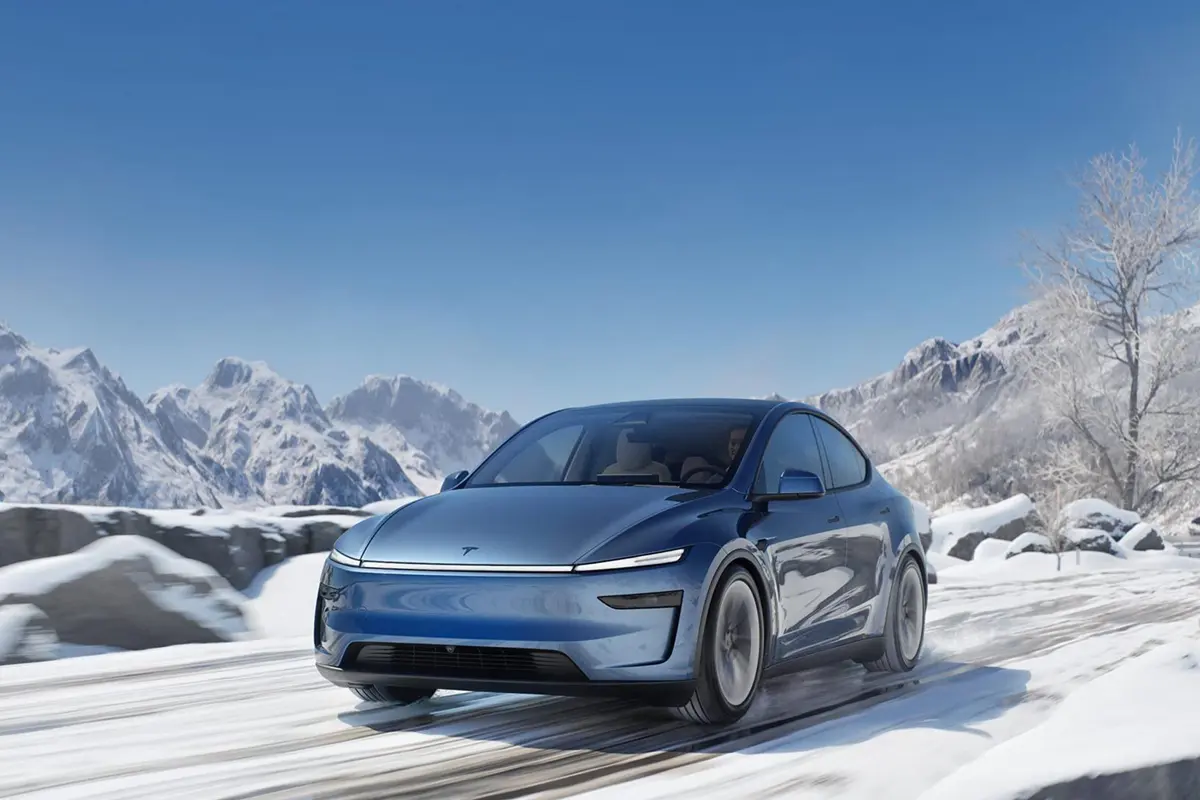
This comparison uses the 2025-refreshed (“Juniper”) Tesla Model Y in five-seat form (a seven-seat option exists in some markets, but the Sealion 7 is strictly a five-seater) and the BYD Sealion 7 built on BYD’s e-Platform 3.0 Evo.
Prices move frequently and differ by country. We list UK, Australian and Malaysian prices separately below — do not compare a UK OTR price with an Australian list price and draw conclusions about which is “cheaper” in an absolute sense.
Price by Market
| Market | Tesla Model Y | BYD Sealion 7 |
| United Kingdom | RWD from £44,990 (WLTP 309 mi / ~497 km) | Comfort RWD from £44,990–46,990 (82.5 kWh, WLTP 300 mi / ~483 km); Design AWD £49,290–51,990; Excellence AWD £57,290–58,990 (91.3 kWh, WLTP 312 mi / ~502 km) |
| Australia | RWD from A$58,900 (WLTP 466 km); Long Range AWD (WLTP 600 km, 0–100 km/h 4.3 s); Performance (WLTP 580 km) | Premium RWD (WLTP 482 km / 567 km NEDC); Performance AWD |
| Malaysia | (Verify current OTR with Tesla; historically competes around RM200k+) | Dynamic RM163,800 (170 kW); Premium RM188,800 (230 kW RWD, 82.5 kWh, 650 km NEDC); Performance RM199,800–203,800 (390 kW AWD, 600 km NEDC) |
The key observation: in the UK and Australia, the base cars start at the same headline price. In Malaysia, the Sealion 7’s Dynamic and Premium undercut the Model Y’s historical positioning by a meaningful margin.
Dimensions, Space and Practicality
| Tesla Model Y (5-seat) | BYD Sealion 7 | |
| Length | 4,751–4,794 mm | 4,830 mm |
| Width | 1,920 mm (excl. mirrors) | 1,925 mm |
| Height | 1,624 mm | 1,620 mm |
| Wheelbase | 2,890 mm | 2,930 mm |
| Boot, seats up | ~822–835 L (rear) + 114–116 L frunk | 520 L (rear) + frunk |
| Boot, seats folded | ~2,004–2,022 L total | 1,789 L |
| Seats | 5 (7 optional in some markets) | 5 |
The numbers point in two directions at once. The Model Y has the larger absolute cargo area — over 800 litres behind the rear seats, nearly double the Sealion 7’s 520-litre rear boot — and a deep front boot ideal for charging cables and a soft bag. The Sealion 7 is the longer car with the longer wheelbase, which usually translates to marginally better rear legroom, and its body is shaped with a more conventional SUV stance that some families prefer for roof rails and child-seat access.
If your priority is maximum cargo volume — a family of five taking a two-week holiday, or a weekly shop that fills the boot — the Model Y’s packaging is genuinely class-leading. If you prioritise rear passenger space and a more upright seating position, sit both cars in and measure.
Battery, Range and Efficiency
| Model Y RWD | Model Y LR AWD | Sealion 7 Comfort RWD | Sealion 7 Excellence AWD | |
| Battery | LFP (BYD-sourced in some markets) | NMC pack | 82.5 kWh Blade LFP | 91.3 kWh Blade LFP |
| WLTP combined | ~497 km (UK) / 466 km (AU) | 600 km | ~483 km | ~502 km |
| Drive | RWD | Dual-motor AWD | RWD | AWD |
| 0–100 km/h | ~5.9 s | 4.3 s | ~7.3 s | ~4.5 s |
Tesla’s efficiency advantage is real: the Long Range AWD’s 600 km WLTP figure is achieved with a battery that is not dramatically larger than the Sealion 7 Excellence’s 91.3 kWh pack. That efficiency gap shows up in real-world motorway cruising and in the number of stops you need on a long trip.
The Sealion 7 counters with LFP Blade chemistry across the range, which is robust for daily home charging to 100% and uses no cobalt in the cathode. The 82.5 kWh Comfort RWD’s ~483 km WLTP is close to the Model Y RWD’s number, but the AWD Sealion 7 variants are noticeably less efficient than Tesla’s AWD.
Charging and the Network Difference
This is the single biggest practical difference between the two cars.
The Tesla Supercharger network — especially in the UK, Europe, North America and increasingly in Asia-Pacific — is the most reliable long-distance EV charging experience in the world: predictable stalls, high utilisation uptime, integrated payment and navigation routing. A 250 kW Supercharger can add significant range in the time it takes to buy a coffee.
The Sealion 7 charges on third-party CCS2 networks (Ionity, Gridserve, Electrify America, Gentari, Shell Recharge, Evie, Chargefox, etc.). The hardware itself is competent — 11 kW AC on board and DC peak charging in the ~150 kW range in most markets (some markets quote higher peaks) — but the experience depends entirely on which network you use, how busy it is, and whether the charger is working. You will need to plan routes with PlugShare/A Better Routeplanner rather than relying on the car to route you.
For families doing weekly school runs with home charging, this difference is marginal. For families who drive long intercity distances regularly, the Supercharger network is a genuine, money-can’t-buy convenience.
Cabin, Infotainment and Driver Assistance
The two interiors reflect opposite philosophies.
The Model Y has Tesla’s minimalist cabin: almost everything is controlled through the central touchscreen, including the speedometer (which is also in the screen), wiper controls and even the glovebox. There is no Apple CarPlay or Android Auto — this is a deliberate Tesla policy and the most common reason buyers cross-shop. The driver-assistance story is strong: Autopilot (lane-keeping, adaptive cruise) is standard, with Enhanced Autopilot / Full Self-Driving available as paid options. Over-the-air updates are frequent and add features years after purchase.
The Sealion 7 has a more conventional layout: a digital instrument cluster, a rotating 15.6-inch (approx.) central DiLink screen, physical shortcut buttons, ventilated front seats and, on higher trims, a panoramic roof. The BYD driver-assistance suite (DiPilot) includes adaptive cruise, lane-keeping and AEB, but its maturity and naming vary by market. Whether the Sealion 7 supports native Apple CarPlay/Android Auto depends on model year and market — verify this with the local BYD distributor, because it is the single most common “must-have” for intenders cross-shopping from Tesla.
Ride, Chassis and Driving Feel
We have not conducted a head-to-head road test of the two cars, so we will not describe subjective steering feel from behind the wheel. What the specifications tell us is structural:
- The Sealion 7 uses double-wishbone front suspension and a multi-link rear with frequency-selective damping (FSD) — hardware that is more sophisticated than what you find in most mid-sized EV SUVs and usually reserved for pricier German offerings.
- The Model Y uses a more conventional MacPherson-strut front and multi-link rear, tuned for efficiency and a firm, low-roll experience. In the Juniper refresh, Tesla softened the suspension and added rear-seat ventilation for the first time, addressing long-standing complaints.
Both cars are competent family cruisers. If chassis refinement over broken urban roads is a high priority, the Sealion 7’s hardware is worth a dedicated test drive.
Safety and Warranty
- Safety ratings: The Model Y is a five-star Euro NCAP car. The Sealion 7 is also a five-star Euro NCAP entry and lists nine airbags, including front, side, curtain and far-side coverage. Both include AEB, lane-keeping and blind-spot monitoring as standard equipment in most markets.
- Warranty: Tesla’s standard battery and drivetrain warranty is typically 8 years/160,000 km (terms vary by market). BYD typically offers an 8-year/160,000 km high-voltage battery warranty in markets like Malaysia, with longer offerings in some European countries — confirm the exact terms and whether they transfer to a second owner. BYD’s service packages are often sold separately, whereas Tesla’s service model is more à la carte.
Advantages and Disadvantages
Tesla Model Y — pros:
- Class-leading Long Range AWD efficiency (600 km WLTP).
- Supercharger network reliability.
- Largest cargo volume in the class (822 L rear, 2,004 L total).
- Mature OTA software and driver-assistance ecosystem.
- Strong resale values in most markets.
Tesla Model Y — cons:
- No Apple CarPlay / Android Auto.
- Minimalist cabin polarising (no instrument binnacle, touchscreen-wiper controls).
- Firm ride on the pre-Juniper setup; the refresh improves but does not eliminate this.
- Interior materials feel spartan next to the Sealion 7.
BYD Sealion 7 — pros:
- Double-wishbone front suspension + FSD dampers.
- Longer wheelbase and more conventional family-SUV cabin layout.
- Rotating central screen, physical controls, ventilated seats.
- Nine airbags.
- Competitive pricing in Malaysia; LFP Blade battery.
- V2L capability on most markets.
BYD Sealion 7 — cons:
- Rear cargo volume (520 L) is smaller than the Model Y’s.
- No proprietary fast-charging network; journey planning relies on third-party apps.
- AWD variants are less efficient than Tesla AWD.
- Infotainment ecosystem and CarPlay support vary by market.
- Resale-value track record in Western markets is shorter than Tesla’s.
How to Choose
- Pick the Model Y if you regularly drive long distances, value charging-network peace of mind, want maximum cargo space, and can live without CarPlay.
- Pick the Sealion 7 if you want a more comfortable, better-riding chassis, a conventional family-SUV cabin with physical buttons, nine airbags, and you mostly charge at home or at work.
- Pick the Model Y Long Range AWD specifically if range is your single biggest concern.
- Pick the Sealion 7 Premium/Design RWD if you want the best balance of price, equipment and rear-drive dynamics without stepping up to the AWD performance variants.
Final Verdict
In 2026, the Tesla Model Y and BYD Sealion 7 have converged to the point where the decision is no longer “Tesla is better” or “BYD is cheaper” — it is about what you value most. Tesla still owns long-distance charging efficiency and software maturity; BYD has matched price, added a more sophisticated chassis, and wrapped it in a family-friendly cabin. Test both on your usual roads, and take your child seats and pram to the dealer — that real-world check will decide faster than any specification table.
